
In this article…
- #1: Flexible Ductwork
- #2: Sheet Metal Ductwork
- #3: Fiberglass Duct Board
- Comparing the Three Types of Ductwork: Flexible vs. Sheet Metal vs. Fiberglass Duct Board
- Why Does the Type of Ductwork Matter?
- Which Type of Ductwork Is Best?
- Is it Time to Replace Your Ductwork?
- Understanding Your Ductwork and How It Affects Your HVAC System
When you think about your HVAC system, you probably picture the outdoor air conditioner, indoor unit, or thermostat. But there’s another component that’s just as important to your home’s comfort: the ductwork.
Your duct system is responsible for moving heated and cooled air throughout your home. Even the highest-efficiency HVAC system can’t perform its best if the ductwork is poorly designed, damaged, or made from the wrong material for the application.
So, whether you’re building a new home, replacing an outdated HVAC system, or considering ductwork replacement, you may come across several different types of duct materials, each having its own strengths, limitations, and ideal uses.
In this guide, we’ll compare the three most common types of ductwork:
- Flexible ductwork
- Sheet metal ductwork
- Fiberglass duct board
You’ll understand how each type works, its advantages and disadvantages, and where it’s most commonly used so you can make a more informed decision for your home.
#1: Flexible Ductwork
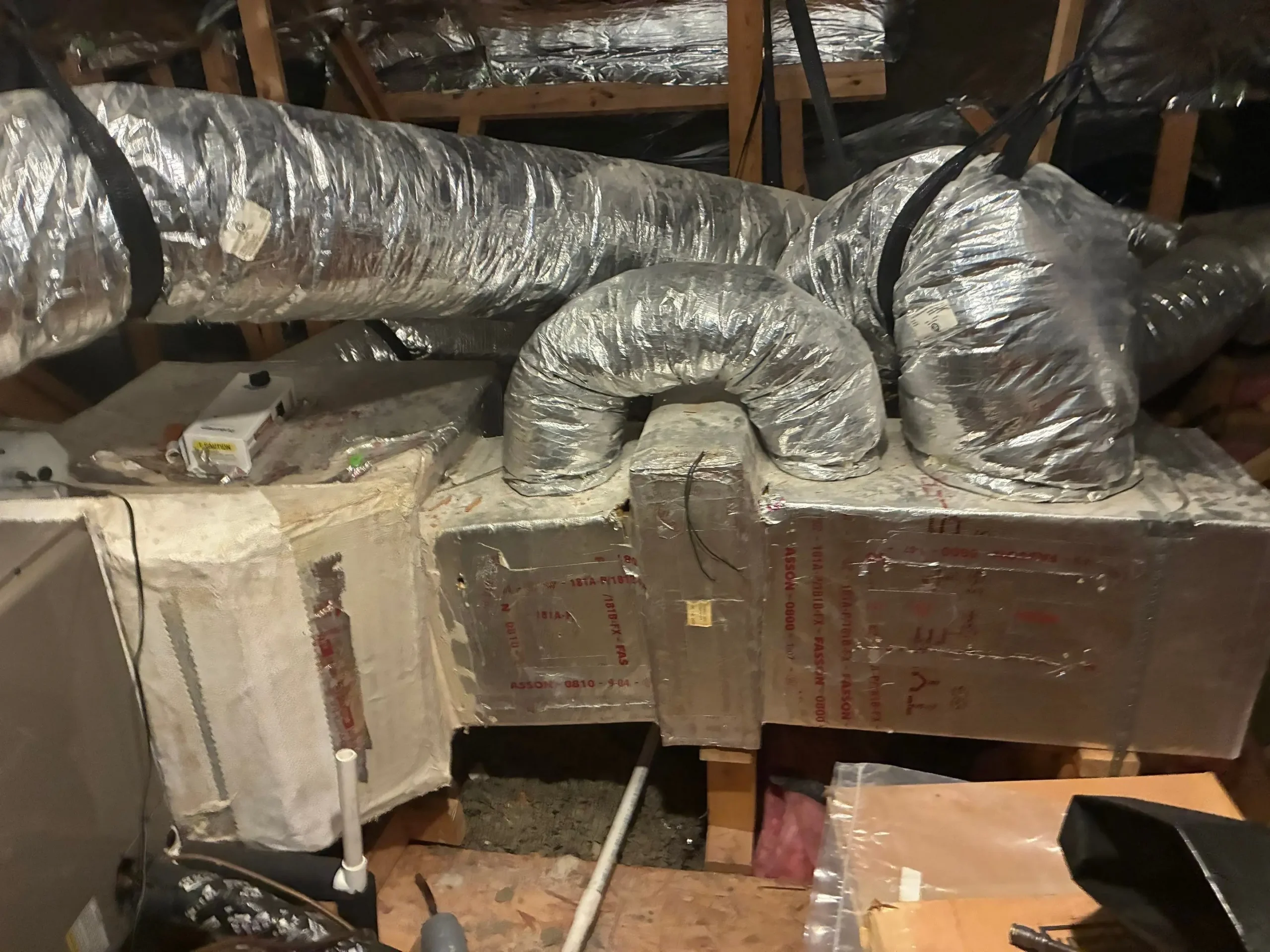
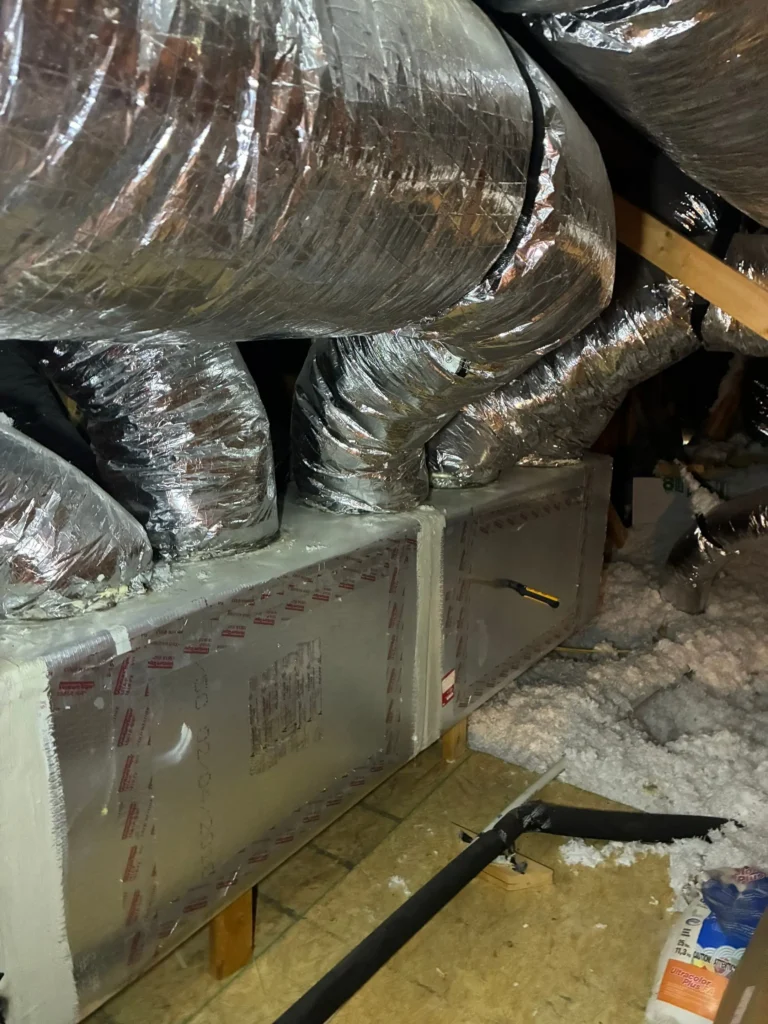
Flexible ductwork (also called flex duct) is the most common type of ductwork installed in residential homes today. It’s especially popular in new construction because it’s lightweight, cost-effective, and easier to install than rigid duct systems.
Flex duct consists of a spiral wire coil surrounded by a plastic inner liner. Around that liner is a layer of insulation designed to reduce heat gain or loss as air travels through the duct. Finally, the entire assembly is covered with a durable protective outer jacket.
Because it can bend and curve around framing, plumbing, and other obstacles, flexible ductwork allows installers to route air throughout a home without needing numerous custom-fabricated pieces.
Flexible ductwork is commonly found in:
- Residential homes
- New construction
- Home additions
- Remodels
- Attics
- Crawl spaces
- Areas where space is limited or difficult to access
What Are The Benefits of Flexible Ductwork?
One of flex duct’s biggest advantages is its affordability. It typically costs less to purchase and install than rigid duct materials, making it an attractive option for many homeowners and builders.
Other benefits include:
- Faster installation
- Lightweight construction
- Easy routing through attics and crawl spaces
- Built-in insulation that helps improve energy efficiency
- Fewer rigid joints that could potentially leak if properly installed
When installed correctly, flexible ductwork can provide years of reliable performance while helping keep installation costs manageable.
Potential Drawbacks of Flexible Ductwork
Although flexible ductwork offers many benefits, proper installation is critical.
Because the material is flexible, it can sag between supports if it’s not properly secured. Excessive bends or sharp turns can also restrict airflow, forcing your HVAC system to work harder to maintain comfortable temperatures.
Flex duct is also more vulnerable to physical damage than rigid metal ductwork. Rodents, pests, or technicians working in the attic can accidentally puncture or crush sections of duct, reducing system performance.
Like any duct material, poor installation, not necessarily the material itself, is often the biggest cause of airflow problems.
How Long Does Flexible Ductwork Typically Last?
Most professionally installed flexible ductwork lasts between 15 and 25 years, although lifespan depends heavily on installation quality, attic conditions, and ongoing maintenance.
#2: Sheet Metal Ductwork
Before flexible ductwork became common, sheet metal ductwork was considered the standard for HVAC systems. Today, it remains the preferred choice in many commercial buildings and higher-end residential applications because of its durability and excellent airflow characteristics.
Sheet metal ducts are typically fabricated from galvanized steel or aluminum. Unlike flexible ductwork, these rigid sections are custom assembled to create an airtight pathway for conditioned air throughout the building.
Sheet metal ductwork is frequently used in:
- Commercial buildings
- Office buildings
- Restaurants
- Schools
- Hospitals
- High-end custom homes
- Mechanical rooms
- Long, straight duct runs
What Are The Benefits of Sheet Metal Ductwork?
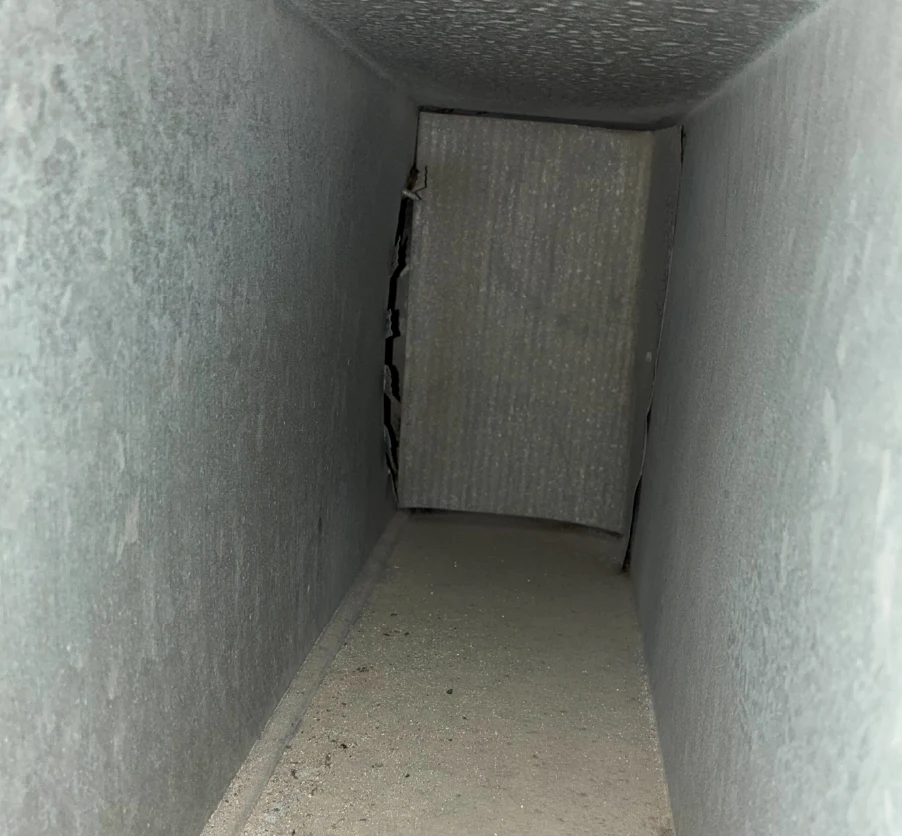
The biggest advantage of sheet metal ductwork is durability.
Because the material is rigid, it maintains its shape over time without sagging or collapsing. This allows air to move more efficiently through the system, helping maximize airflow and reduce unnecessary strain on the HVAC equipment.
Additional advantages include:
- Excellent airflow performance
- Extremely long lifespan
- Easier to professionally clean
- Better resistance to microbial growth due to its smooth interior surface
- Greater resistance to rodents and pests
- Less likely to become crushed or damaged
When properly insulated, sheet metal ductwork can provide decades of reliable service.
Potential Drawbacks of Sheet Metal Ductwork
The primary disadvantage is cost.
Sheet metal ductwork requires more labor to fabricate and install than flexible ductwork. Each section must be carefully measured, cut, assembled, sealed, and supported, increasing installation time.
Because metal naturally conducts heat, ducts installed in unconditioned spaces, such as attics, typically require additional insulation to prevent energy loss and condensation.
Metal ducts may also transmit more airflow noise than insulated duct materials, although proper system design can minimize this issue.
How Long Does Sheet Metal Ductwork Typically Last?
Properly installed sheet metal ductwork often lasts 30 years or longer, making it one of the longest-lasting duct materials available.
#3: Fiberglass Duct Board
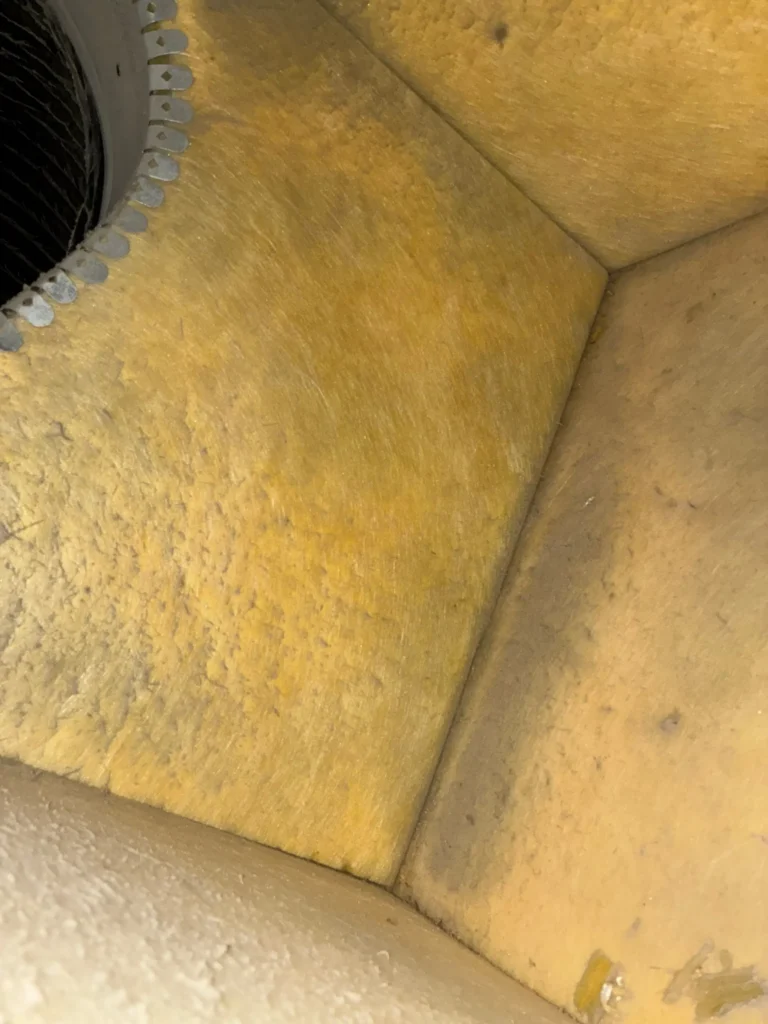
Fiberglass duct board is another type of rigid ductwork commonly used in both residential and commercial HVAC systems. Unlike sheet metal ducts that require insulation to be added afterward, duct board is manufactured with insulation built directly into the material.
Rigid fiberglass panels are cut, folded, and sealed together to create rectangular duct sections with a foil exterior and an insulated interior.
It can be easy to confuse fiberglass duct board with fiberglass insulation wrapped around metal ducts, but they are two different products.
Fiberglass duct board is commonly installed in:
- Residential homes
- Office buildings
- Schools
- Medical facilities
- Churches
- Buildings where quieter HVAC operation is desired
What Are The Benefits of Fiberglass Duct Board?
The built-in insulation offers several advantages.
Because the material naturally helps reduce heat transfer, it improves energy efficiency while also minimizing condensation on the outside of the duct.
Fiberglass also absorbs sound much better than metal, making duct board a popular choice when quieter HVAC operation is also a priority.
Additional benefits include:
- Excellent thermal insulation
- Reduced airflow noise
- Good energy efficiency
- Lower material costs than insulated sheet metal
- Helps reduce condensation
Potential Drawbacks of Fiberglass Duct Board
Like any material, fiberglass duct board has limitations.
Its surface is more susceptible to physical damage than metal, particularly if technicians frequently work around the ducts.
Cleaning can also be more complicated because aggressive brushing methods may damage the interior surface. Over many years, the interior material may begin to deteriorate if exposed to moisture or poor maintenance.
How Long Does Fiberglass Duct Board Typically Last?
Fiberglass duct board typically lasts 20 to 30 years, depending on environmental conditions and maintenance.
Comparing the Three Types of Ductwork: Flexible vs. Sheet Metal vs. Fiberglass Duct Board
While all three materials accomplish the same goal (moving heated and cooled air throughout a building), they each excel in different areas.
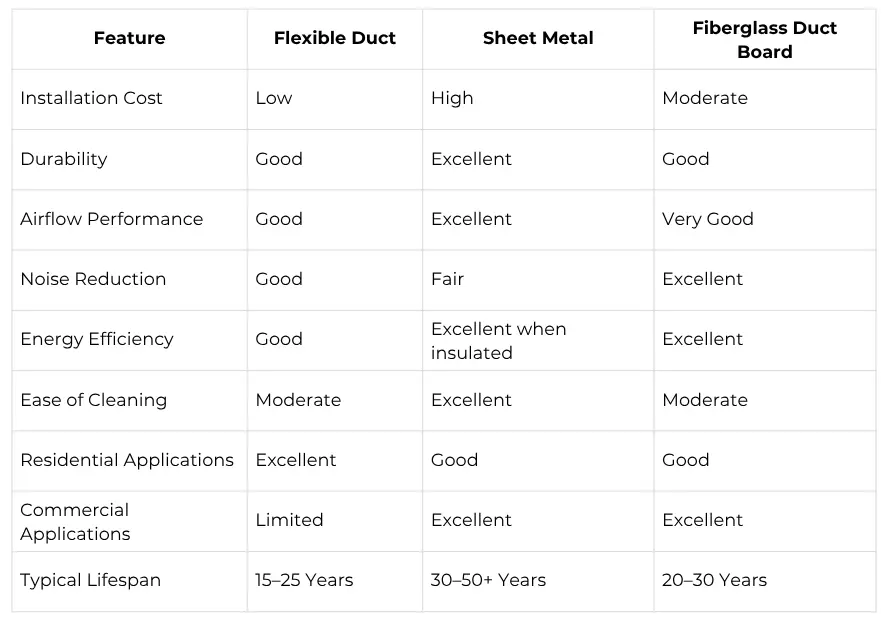
It’s important to remember that these are general comparisons. A properly installed flexible duct system can outperform a poorly designed metal system, and vice versa.
Material is only one piece of the equation.
Why Does the Type of Ductwork Matter?
When it comes time to replace your HVAC system, many homeowners focus entirely on choosing the right air conditioner or furnace. But the ductwork has a major impact on how efficiently that equipment performs.
The type of ductwork can influence:
- Airflow throughout the home
- Heating and cooling efficiency
- Indoor comfort
- Temperature consistency between rooms
- Indoor air quality
- HVAC noise levels
- Maintenance requirements
- Long-term durability
- Installation and replacement costs
For example, if airflow is restricted because ducts are undersized, damaged, or poorly installed, your HVAC system may run longer than necessary, leading to higher energy bills and unnecessary wear on the equipment.
Likewise, duct materials with better insulation properties can help reduce energy loss as conditioned air travels through hot attics or unconditioned spaces.
Ultimately, the performance of your HVAC system depends on both the equipment and the duct system working together.
Which Type of Ductwork Is Best?
There’s no universal “best” duct material because every home and building is different and has different needs.
- Flexible ductwork is often the best choice for many residential homes because it’s affordable, easy to install, and works well in attics and crawl spaces where routing around obstacles is necessary.
- Sheet metal ductwork is an excellent option when durability, maximum airflow, and long-term performance are top priorities. It’s commonly found in commercial buildings and premium residential installations where longevity is especially important.
- Fiberglass duct board provides an excellent balance of energy efficiency and quieter operation thanks to its built-in insulation, making it a popular choice for schools, offices, and homes where noise reduction is a priority.
The right material ultimately depends on factors such as:
- Your home’s design
- Available installation space
- Your budget
- Climate
- Energy-efficiency goals
- Noise considerations
Rather than asking which material is “best,” it’s more helpful to ask which material is best for your specific home and HVAC system.
Is it Time to Replace Your Ductwork?
Ductwork doesn’t necessarily need to be replaced simply because it reaches a certain age. In many cases, properly installed ducts can continue performing well for decades.
However, replacement may be worth considering if your ductwork has:
- Significant air leaks
- Crushed or collapsed sections
- Excessive rust or corrosion
- Microbial growth or moisture damage
- Rodent or pest damage
- Poor airflow throughout the home
- Uneven temperatures between rooms
- Visible deterioration
- Been improperly sized for your HVAC system
If you’re replacing your HVAC system and it’s over 12 years old, it’s smart to consider having your ductwork inspected as well.
Installing a high-efficiency air conditioner on an outdated or poorly designed duct system can prevent the new equipment from reaching its full performance and efficiency potential.
A professional inspection can identify leaks, airflow restrictions, insulation problems, and sizing issues that may be affecting comfort and efficiency.
Understanding Your Ductwork and How It Affects Your HVAC System
Although it’s hidden behind walls, ceilings, and attics, your ductwork plays a critical role in keeping your home comfortable year-round.
Whether it’s flexible ductwork, sheet metal, or fiberglass duct board, each material offers its own advantages depending on the layout of your home, your budget, and your long-term comfort goals.
Just as importantly, even the best duct material can’t overcome poor design or improper installation.
Well-sized, properly sealed, and professionally installed ductwork is often the biggest factor in delivering consistent airflow, improving energy efficiency, and helping your HVAC system perform at its best.
If you’re planning to replace your HVAC system, renovate your home, or you’ve noticed uneven temperatures, weak airflow, or rising energy bills, it may be time to take a closer look at your ductwork with a simple visual inspection.
Want to learn more about the role your ductwork plays in your home’s comfort? Check out our full guide to ductwork, including its purpose, how it works, and why it matters. Then, you’ll better understand the importance of your ductwork and know whether it’s time for a repair or replacement.