
In this article…
- What Is a SEER Rating?
- Low SEER vs High SEER Systems: Is There A Major Difference?
- What Are The Biggest Differences Between a Low SEER and a High SEER HVAC System?
- Is a High SEER System Worth It?
- What is The Best SEER Rating for Texas Homes?
- Choosing the Right SEER Rating for Your Home
- Frequently Asked Questions
If you’ve been shopping for a new air conditioner recently, chances are you’ve heard the term SEER rating thrown around quite a bit. You’ve probably also noticed that the higher the SEER rating gets, the more expensive the system becomes.
That naturally leads you to ask…Does SEER rating really matter?
Truthfully? Yes, the SEER rating of your HVAC system does matter, but maybe not in the way you’d think.
A higher SEER system can absolutely lower your monthly energy bills and improve comfort throughout your home. But that doesn’t automatically mean the highest SEER system is the best choice for every homeowner.
Overall, the SEER rating plays a role in the total balance between efficiency, comfort, and value of a new system.
Understanding the difference between low SEER and high SEER systems can help you make a smarter long-term investment for your home, which is exactly what we’ll discuss in this article.
What Is a SEER Rating?
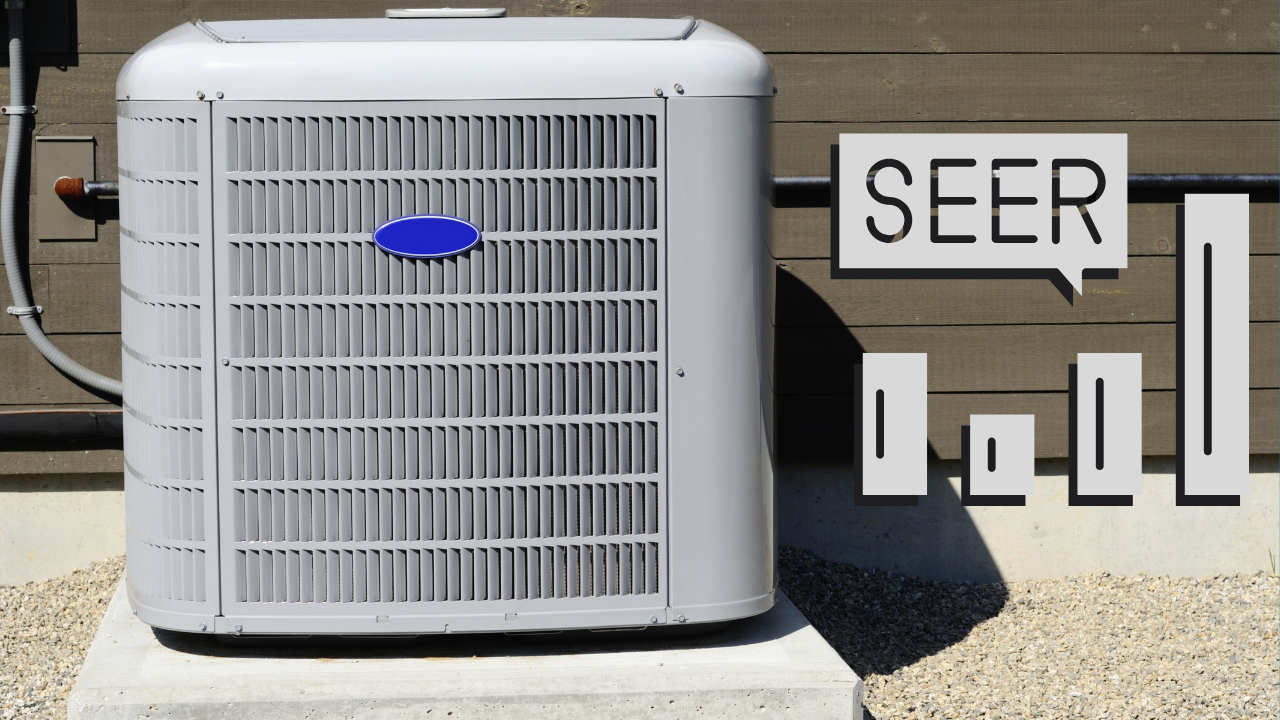
SEER stands for Seasonal Energy Efficiency Ratio. It’s basically a measurement of how efficiently your air conditioner cools your home over an entire cooling season.
The easiest way to think about it is like miles per gallon for your car.
A higher SEER rating means the system uses less electricity to produce the same amount of cooling compared to a lower SEER system.
For example:
- A 16 SEER system is more energy efficient than a 14 SEER system
- An 18 SEER system is more efficient than a 16 SEER system
You may have also heard the term SEER2, which is the newer testing standard manufacturers use.
SEER2 ratings are designed to reflect more realistic real-world operating conditions, but the overall concept is the same: higher numbers mean better efficiency.
Low SEER vs High SEER Systems: Is There A Major Difference?
When comparing HVAC systems, most homeowners are usually deciding between:
- 14 SEER systems
- 15–16 SEER systems
- 18+ SEER high-efficiency systems
Each category comes with its own pros and cons.
Lower SEER systems generally have:
- Lower upfront installation costs
- Simpler equipment
- Fewer advanced comfort features
- Higher monthly operating costs
Higher SEER systems usually include:
- Better energy efficiency
- More advanced technology
- Improved humidity control
- Quieter operation
- Higher upfront costs
The biggest mistake homeowners make is assuming SEER is only about saving money on electricity. In reality, higher efficiency systems also improve overall comfort inside the home, which is an important aspect to consider when replacing your system.
What Are The Biggest Differences Between a Low SEER and a High SEER HVAC System?
Because the SEER rating of your new HVAC system greatly impacts your future comfort, longevity, and overall comfort, understanding what differentiates a high-efficiency system from a lower-efficiency system is essential.
Some of the biggest differences between a low and high SEER HVAC system include:
- Energy bills
- Comfort and humidity control
- Noise levels
- Upfront cost
- And long-term savings
1. Energy Bills
This is usually the first thing people think about when they hear “high efficiency.”
A higher SEER system uses less electricity to cool your home, which can reduce monthly utility bills, especially during long Texas summers.
If your AC runs heavily for several months out of the year, those savings can add up over time.
That said, the amount you save also depends on several factors, including:
- Your home’s insulation
- How often your system runs
- The size of your home
- Your thermostat settings
- Local energy costs
For some, the savings difference between a 14 SEER and 16 SEER system may feel fairly modest month-to-month. For others with larger homes or older equipment, the savings can be more noticeable.
2. Comfort and Humidity Control
This is where higher SEER systems often separate themselves the most.
Many 15–16 SEER and higher systems come with upgraded technology, like:
- Two-stage compressors
- Variable-speed motors
- Communicating systems
Instead of blasting on at full power every single time, these systems can run at lower speeds for longer periods. That helps maintain more consistent indoor temperatures and improves humidity control.
In San Antonio, humidity plays a major role in comfort. Sometimes a home may (technically) reach the thermostat setting, but still feel sticky or uncomfortable because humidity levels are too high.
Higher efficiency systems often do a much better job removing moisture from the air, making the home feel cooler and more comfortable overall.
3. Noise Levels
Another thing many homeowners quickly notice is how much quieter higher efficiency systems can be.
Lower SEER systems often operate more like an on/off switch, going from full blast to completely shut off and back to full blast.
Higher SEER systems tend to ramp up and down more gradually, creating quieter and smoother operation.
If you upgrade from an older, lower SEER system to a higher SEER, you may be surprised by how much quieter newer high-efficiency equipment sounds both inside and outside the home.
4. Upfront Costs
One of the most common questions we get at Wright Home Services is…“Why does the price jump so much between a 14 SEER and 15–16 SEER system?”
The answer mostly comes down to technology.
A basic 14 SEER system is usually built with more standard, entry-level components. Once you move into the 15–16 SEER range, manufacturers often start adding:
- More advanced compressor technology
- Variable-speed blower motors
- Two-stage cooling capabilities
- Higher-end control boards
- Improved coil designs
- Communicating thermostat features
These upgrades help improve both efficiency and comfort, but they also increase manufacturing and installation costs.
In many cases, you’re not just paying for slightly better efficiency. You’re paying for an entirely different level of system performance through efficiency, longevity, and comfort.
That’s why the price gap can sometimes feel surprisingly large between systems that only appear one or two SEER points apart.
5. Long-Term Savings
There’s no denying that high-efficiency systems cost more upfront. But, when choosing the right SEER rating for your home, it’s important to look at the bigger picture instead of only focusing on installation price.
A higher SEER system may provide:
- Lower monthly utility bills
- Better comfort
- Less humidity
- Quieter operation
- Improved long-term value
If you’re planning to stay in your home for many more years or are in your forever home, investing in a higher efficiency system can make more sense financially over time.
However, if you plan to move in a few years, the additional investment may not always provide enough return to justify the higher cost.
Is a High SEER System Worth It?
It depends! There is no universal “perfect” SEER rating for every home because every home in unique, even if they have the same square footage.
A higher SEER system may absolutely be worth it if:
- You plan to stay in your home long-term
- Your energy bills are very high
- Your current system struggles with humidity
- You want a quieter operation
- Comfort is a top priority
- Your AC runs heavily throughout the year
On the other hand, a basic 14 SEER system may still be a solid option for homeowners who:
- Need a lower upfront investment
- Are selling soon
- Have a smaller home
- Don’t use their AC as heavily
- Simply want reliable cooling
Sometimes, you may assume they need the highest efficiency system available, when in reality a mid-range system may provide the best balance between cost and comfort.
Finding a trustworthy HVAC company who asks the right questions, provides clear answers, and doesn’t pressure you into one option over the other is a large part in ensuring your new system will have the right SEER rating for your needs.
What is The Best SEER Rating for Texas Homes?
Because of our long, hot summers here in Texas, SEER ratings tend to matter more than they might in cooler parts of the country. Air conditioners in Texas work hard for much of the year, so efficiency can have a noticeable impact on operating costs.
For many homeowners, the sweet spot is often around 15–17 SEER.
That range usually offers:
- Better efficiency
- Improved comfort features
- Strong humidity control
- Better long-term performance
- More reasonable pricing compared to ultra-high-efficiency systems
Higher SEER systems can make even more sense for:
- Larger homes
- Multi-story homes
- Homeowners who work from home
- Families sensitive to humidity
- People planning to stay in their home long-term
At the same time, not every home necessarily needs an ultra-high-efficiency 20+ SEER system.
The best system for you depends on the home itself, your comfort goals, and your budget.
Choosing the Right SEER Rating for Your Home
Now that you understand the biggest differences between a high SEER rating and a lower one, your next question, logically, must be…which is best for my home?
A higher efficiency system will cost more upfront, but save more in the long-term energy usage. This type of system would be best for long-term homeowners looking to maximize their comfort, improve humidity control, and overall want to make a long-term investment.
A lower efficiency system, however, may be the better option for homeowners who plan to sell their home in a few years, have a smaller square footage, aren’t picky about overall comfort needs, and have a smaller budget.
Remember, the SEER rating isn’t the only thing to consider when choosing a new HVAC system.
The right system should balance:
- Efficiency
- Comfort
- Humidity control
- Budget
- And long-term value
For some homeowners, a 14 SEER system may be the right fit. For others, upgrading to a 15–16 SEER system could provide better comfort and lower operating costs for years to come.
The most important thing is choosing a system that fits your home and your specific needs, not just the highest efficiency rating on the label.
Is your AC not working as efficiently as it used to? Are you noticing more comfort issues around your home? Well, it may be time for a full system replacement.
A new system with the proper SEER rating and tonnage will not only provide you with the comfort you deserve, but also improve efficiency and save on energy in the long run.
If you’re on the fence about replacing your old system, check out this article that outlines some of the most common signs it’s time to replace your HVAC system.
Frequently Asked Questions
Is a higher SEER rating always better?
Not necessarily. Higher SEER systems are more efficient, but they also cost more upfront. The best option depends on your budget, comfort goals, and how long you plan to stay in the home.
Will a higher SEER system lower my electric bill?
Yes, in most cases. Higher SEER systems use less electricity to cool your home, especially during long cooling seasons.
What SEER rating is recommended in Texas?
For many Texas homeowners, 15–17 SEER systems provide a strong balance between efficiency, comfort, and value.
Does a higher SEER system cool better?
Not always “colder,” but many high-efficiency systems provide more consistent temperatures and better humidity control, which improves overall comfort.
What’s the difference between SEER and SEER2?
SEER2 is the newer HVAC efficiency testing standard. It uses updated testing methods designed to reflect more realistic operating conditions.