
In this article…
- Do HVAC Brands Actually Matter? Why Many Homeowners Focus on Brand Name
- What HVAC Brand Name Actually Impacts
- What HVAC Brand Name Does NOT Guarantee
- What Actually Matters More Than the Brand When Choosing a New HVAC System
- How to Choose the Right HVAC System For You
- What We Recommend at Wright Home Services
- Finding The Right System For Your Home
If you’re thinking about replacing your HVAC system, one of the first things you’ve probably done is research what brands are best.
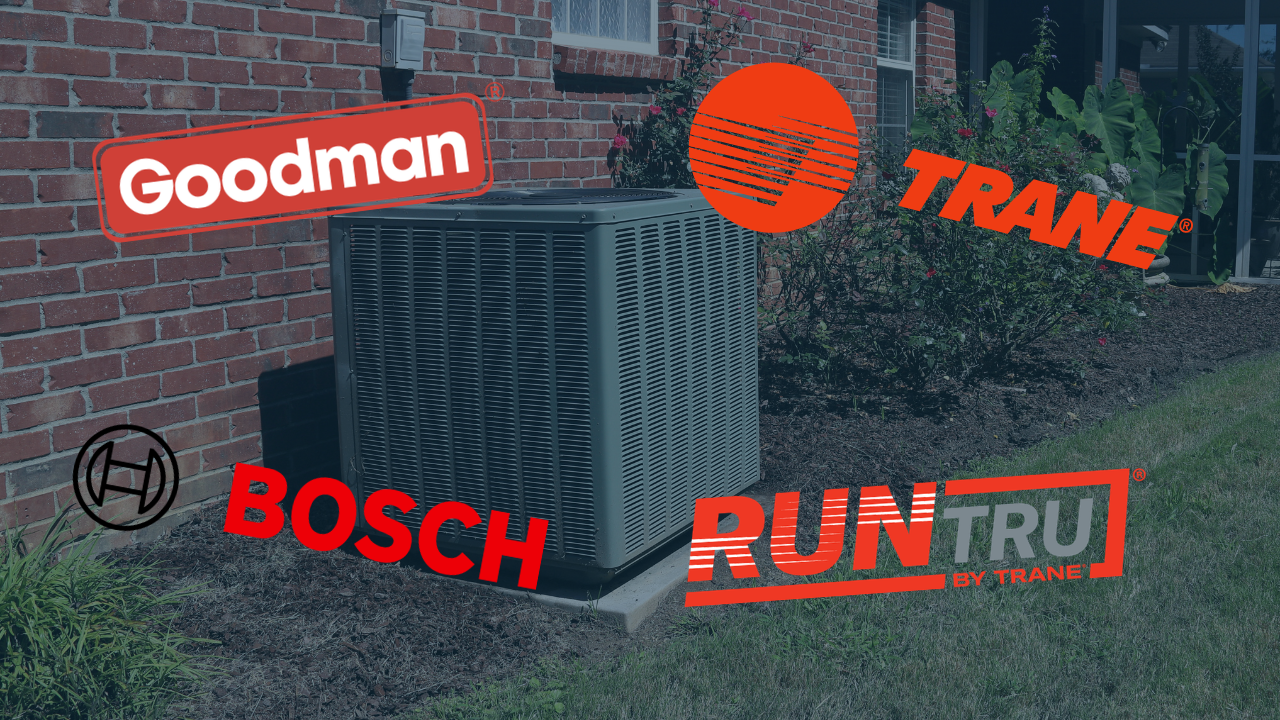
You’ve probably seen comparisons like Trane vs Carrier, Lennox vs Goodman, and articles and videos talking about what’s the most reliable AC brand is.
And naturally, you’re wondering…“Which one is the best?”
It’s a fair question. This is a major investment, and you want to get it right. But the truth is, focusing too much on brand can actually lead you in the wrong direction.
Because when it comes to HVAC systems, the brand is only one piece of the puzzle and not the most important one.
So…does the HVAC brand truly matter when it comes to replacing your system?
This article will dive directly into whether brand name matters for an HVAC system replacement, what’s really important when choosing a new system, and what we recommend to ensure you’ll feel confident in your comfort and your home.
Do HVAC Brands Actually Matter? Why Many Homeowners Focus on Brand Name
When you think about other purchases, like cars, appliances, and electronics, brand plays a big role.
You trust certain names because they’ve either been around a long time, you’ve heard good things from friends or family, or they have strong marketing and reputation.
So, it makes sense that you would approach a new HVAC system the same way.
But here’s the difference: An HVAC system isn’t just something you buy and plug in.
It’s a system that:
- Has to be sized specifically for your home
- Relies on other elements, like ductwork and thermostats, that may already have issues
- Requires precise installation to function correctly
That means two identical units from the same brand can perform completely differently depending on how they’re installed.
With that in mind, does the brand of your new HVAC system really matter?
The honest answer is yes, but not nearly as much as most people think.
All major HVAC manufacturers today, like Carrier, Trane, Lennox, Goodman, Rheem, and others, are required to meet strict performance and safety standards.
So at a baseline, you’re not choosing between “good” and “bad.”
You’re choosing between systems that are just slightly different in features, priced at different tiers, and designed for different preferences.
For example, a premium brand might offer more advanced communication systems with thermostats, indoor air quality systems, and more. A budget-friendly brand might focus moreso on reliability and affordability.
While this may seem like a gap in the overall quality of the equipment, the performance between brands is often smaller than the gap created by installation quality.
Did you know that the most important day of your new system’s life is the day it’s installed? Read more about the crucial elements of a high-quality HVAC installation!
What HVAC Brand Name Actually Impacts
While brand name isn’t the most important thing to consider, it’s still important to look into when choosing a new HVAC system.
Some of the biggest points to look at when comparing brands are:
- Warranty differences
- Features and technology
- Overall price range
- Parts availability (for repairs)
1. Warranty Differences
Some brands offer stronger or more straightforward warranty structures. Others may have more limitations or require stricter registration.
This may affect your decision depending on how long you plan to live in your home, if you plan to sell your home in the near future, or live in an area with a harsher climate, like Texas.
2. Features and Technology
Certain brands lean more into things like smart system communication, advanced variable-speed technology, and integrated humidity control.
Depending on your preferences, you may want to choose a brand that has more options and upgrades available.
3. Overall Price Range
Brand often correlates with pricing tiers:
- Premium brands = higher upfront cost
- Affordable brands = lower upfront cost
This fact alone can influence which brand you choose for your new HVAC system.
4. Parts Availability
Some brands may have more accessible parts depending on your area and where the equipment is manufactured.
This may be a deciding factor to consider future potential repair timelines and product availability when choosing an HVAC brand.
What HVAC Brand Name Does NOT Guarantee
Even if you choose the highest-rated, most expensive HVAC brand, it does not always guarantee a smooth experience and uninterrupted comfort. This is where most homeowners are surprised.
Choosing a “top brand” does not guarantee:
- A comfortable home
- Even temperatures in every room
- Lower energy bills
- Fewer repairs
Because none of those things come from the equipment alone. They come from how the system is designed and installed.
A $15,000 premium system installed incorrectly can perform worse than a $9,000 system installed properly.
And that’s not an exaggeration. It happens all the time, and at Wright Home Services, we see this more often than you’d think.
This is why choosing a trustworthy, reliable HVAC company to install your system is just as (if not more) important than choosing a highly rated brand.
What Actually Matters More Than the Brand When Choosing a New HVAC System
Knowing what to consider and prioritize when investing in a new HVAC system is essential.
If your goal is long-term comfort, efficiency, and reliability, these are the factors you should focus on first.
1. Installation Quality (The Most Important Factor)
Installation is everything. A proper installation involves much more than just swapping out equipment.
It includes:
- Performing a load calculation (Manual J) to determine the right size
- Ensuring proper airflow through your duct system
- Setting the correct refrigerant levels
- Testing and verifying system performance
Having the proper-sized system for your home is another important element of installation.
If a system is too large, it might turn on and off constantly (or short-cycle), fail to remove humidity properly, and wear out faster.
A system that’s too small might run constantly without reaching the desired temperature, struggle to keep up in extreme temperatures, and result in higher energy bills.
Neither of those issues has anything to do with brand. They’re installation and design problems.
2. The Company You Choose
The company installing your system is arguably more important than the system itself, and this not only affects the installation quality, but also affects the quality of after-care you receive.
A quality HVAC company will:
- Take time to evaluate your home
- Ask questions about comfort issues
- Explain your options clearly
- Stand behind their work
A lower-quality contractor may:
- Rush the installation
- Skip important steps
- Recommend whatever is easiest to install rather than what’s best for you
This is why doing your research, asking the right questions, and trusting your gut is essential when finding the right HVAC company to work with.
3. System Design for Your Home
No two homes are the same, even if they have the same square footage.
Factors like:
- Square footage
- Ceiling height
- Insulation levels
- Window placement
- Sun exposure
All impact how your system should be designed.
For example, a two-story home may need zoning or airflow adjustments to avoid hot upstairs rooms. A home with poor insulation may need a different approach than one that’s tightly sealed.
A “great brand” won’t fix a system that wasn’t designed properly for the space. A high-quality HVAC company will ensure your new system fits your home and is installed to last.
4. Efficiency Ratings (SEER2)
Efficiency is one of the biggest drivers of long-term cost.
Higher efficiency systems can:
- Reduce monthly energy bills
- Maintain more consistent temperatures
- Operate more quietly
But higher efficiency doesn’t automatically mean “better” for everyone.
The right choice of efficiency for your home depends on how long you plan to stay in your home, your energy usage, and your budget.
Again, this decision matters more than brand alone.
5. Features That Fit Your Lifestyle
Modern HVAC systems offer a wide range of features, like variable-speed operation for smoother comfort, better humidity control, smart thermostat integration, and quieter performance.
For some homeowners, these features make a huge difference in daily comfort. For others, a simpler system may be the better fit.
The key is choosing based on your needs, not just brand reputation.
6. Warranty and Support
Most systems today come with similar parts warranties, often around 10 years.
But what really matters is:
- Who handles the warranty
- How easy it is to get service
- Whether your contractor stands behind the installation
A strong company can make a huge difference in your experience over the life of the system.
How to Choose the Right HVAC System For You
Instead of asking what brand is best, shift your mindset and think what system is best for your home. But, what should you consider to choose the right HVAC system for you?
Here are a few questions to consider:
- What do you like about your current system?
- What don’t you like about your current system?
- What comfort issues would you like to improve?
- Have you had increased allergies over the years?
- How much longer do you plan to live in your home?
- What is your budget?
First, outlining what you want to get out of your new system allows you to have a clear vision of the type of system that’s best for you. Then, you can align your goals with your budget to ensure you find a system that both meets your comfort needs and your budget.
Mistakes To Avoid When Choosing An HVAC System
Some of the most common (and costly) mistakes to avoid when choosing a new HVAC system include:
- Choosing based on brand alone
- Going with the cheapest quote without understanding why
- Skipping ductwork evaluation
- Not asking about installation details
- Assuming all HVAC companies are the same
Avoiding these can save you thousands over time and ensure you aren’t blindsided by a low-quality product, company, or installation.
What We Recommend at Wright Home Services
At Wright Home Services, we don’t believe in pushing one brand as the best because the truth is, the best system is the one that’s properly designed for your home and installed the right way.
Helping you find the best system for your home means:
- Taking the time to fully evaluate your home
- Understanding your comfort concerns
- Explaining your options in a clear, honest way
- Recommending systems based on performance, efficiency, and reliability
We work with trusted equipment, but focusing on brand name isn’t our top priority. It’s making sure your system actually delivers the comfort you expect.
Remember, a well-installed system will always outperform a poorly installed one, no matter the brand.
Finding The Right System For Your Home
If your system is getting older or you’re starting to explore your options, the best first step is to outline your wants, goals, and needs when it comes to comfort.
Then, you can schedule a professional evaluation with a trusted HVAC company that will help you find the right system for you, not just what will make them the most money.
While HVAC brands do matter, they’re not the most important factor in your decision.
If you want a system that performs well for years and years, focus on:
- Choosing the right company
- Proper system design
- Installation quality
Once those are in place, you can choose the system that will meet all your comfort needs, no matter the brand name.
When outlining your budget and considering different HVAC companies and brand names, another big question you may be wondering is when is the more expensive system worth it, and is it right for me?
To help you along your journey to finding the best system for you, check out this article that outlines when you should invest in the more expensive HVAC system and when you shouldn’t.